
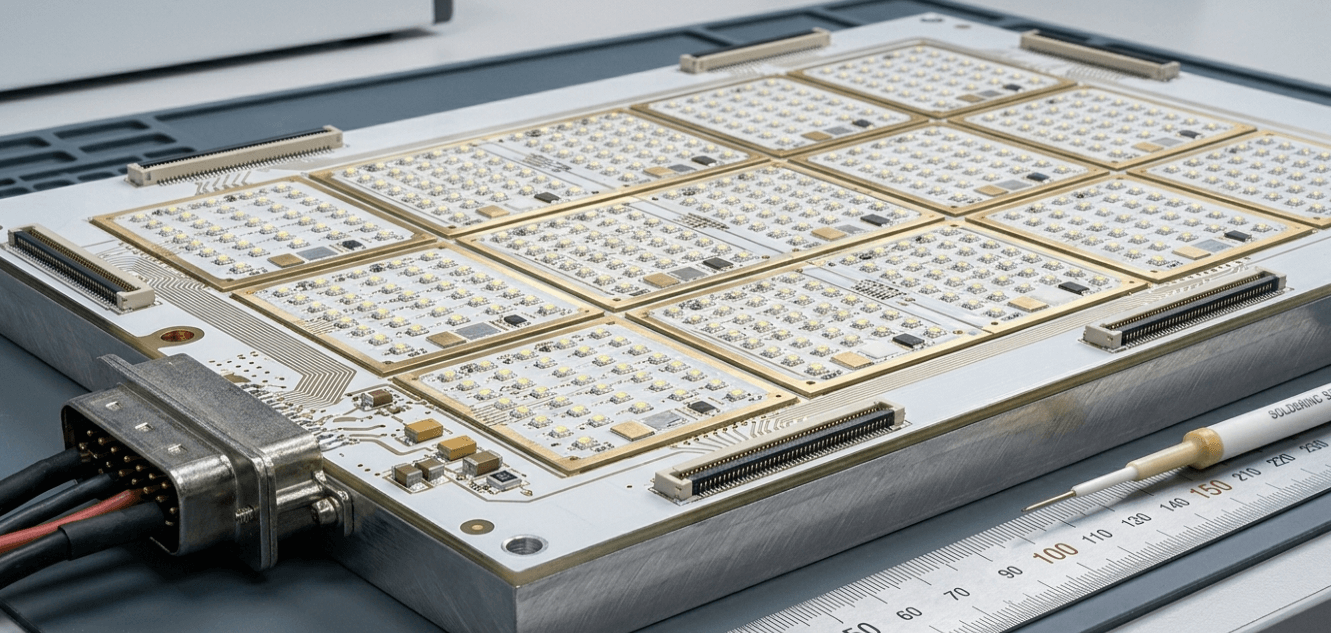
LEDs Always Overheat — Can Metal Substrate PCB Solve It?
If the lifespan of your LED lights is shorter than expected, the problem may not lie with the LED chips. In many cases, the weak link is actually located beneath the LEDs: the PCB.
FR4 is a glass-fiber epoxy laminate and the most common PCB base material in electronics. It provides strong insulation, but it was not designed to manage heat. When FR4 cannot dissipate heat fast enough, the LED junction temperature rises. Light output drops, color stability weakens, and service life gets shorter. Metal substrate PCB, also called MCPCB, solves this problem at the circuit board level.
How does it handle the Heat That FR4 cannot?
The main difference lies in the structure of the circuit board. Metal substrate PCB use aluminium or copper in place of the glass fibre substrate found in standard FR4 circuit boards. Their laminated structure typically comprises a metal core, a thin thermally conductive dielectric layer, and a copper circuit layer for the LED components. Heat is transferred from the LEDs through the circuit and dielectric layers, then dissipated into the metal core.
The thermal conductivity of FR4 is typically around 0.3–0.4 W/m·K. Metal core PCB — whether aluminum-based or copper-based — delivers 1–3 W/m·K or higher, depending on the base material.This difference affects the performance of the LEDs during actual operation. When using FR4, heat tends to accumulate near the LED package.
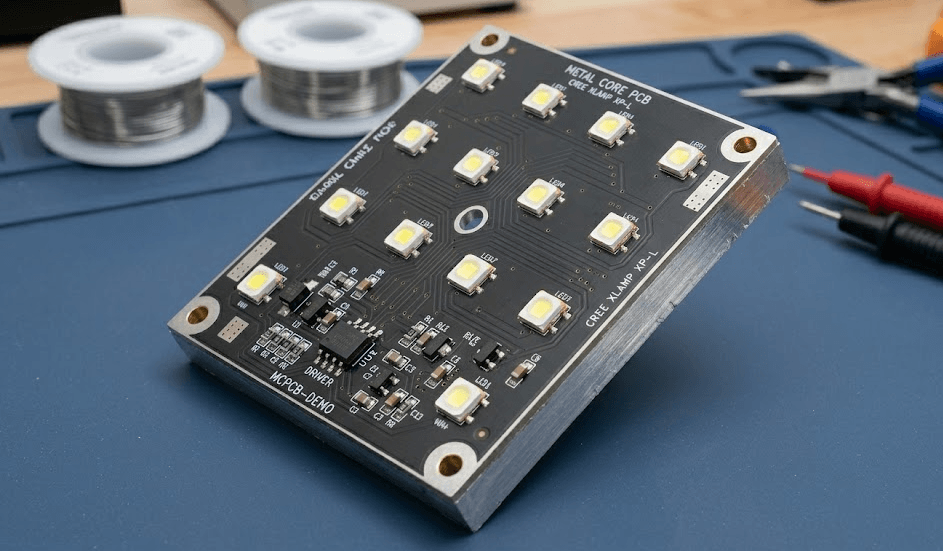
Does Metal Substrate PCB Make a Measurable Difference?
LED performance is closely linked to junction temperature. Higher junction temperatures reduce light output, accelerate lumen depreciation, and shorten the service life of the luminaire.
The contrast between FR4 and metal substrate PCB under real operating conditions is measurable. A 1W LED running on standard FR4 can reach junction temperatures of 90–110°C, pushing the board close to its thermal limit. Switch to a metal substrate PCB under the same conditions, and junction temperature drops by up to 20–30°C. That gap directly translates into how long the LED performs before visible degradation sets in. In one documented case, moving from FR4 to an aluminum substrate brought junction temperature down to 75°C, extending L70 lifespan to 60,000 hours.
If the circuit board cannot dissipate heat rapidly, the LEDs will continue to operate at high temperatures. Over time, this leads to visible brightness degradation and an increased incidence of on-site failures — not because the LED itself was defective, but because the board beneath it was never built to handle the load.
Is Metal Substrate PCB Right for Your Application?
Not every LED product needs Metal substrate PCB. Low-power decorative lights, small indicators, and simple LED boards with light thermal loads can often run on FR4 without trouble. If the wattage is low and the product only works for short periods, a metal base may add cost without solving a real problem.
The situation changes with higher power or longer operating hours. Street lights, automotive lighting, industrial high-bay fixtures, commercial downlights, UV LED systems, and dense LED arrays all generate more heat in a smaller area. They also run for long periods, often in warm or enclosed environments. Under those conditions, FR4 usually cannot keep the LED junction temperature under control.
Reliability is another concern. When FR4 stays hot for long periods, the board material can age faster. Dielectric performance may shift, solder joints can weaken, and delamination risk increases. For LED products expected to run 50,000 hours or more, that accumulated stress can cause problems before the LED reaches its rated life.
Before choosing the board type, check the three points:
| Question | Why It Matters |
|---|---|
| Does the LED power exceed 10W? | Higher wattage creates more heat at the board level. |
| Will the light run for long hours? | Continuous operation gives heat more time to build up. |
| Will the fixture work in a warm or enclosed space? | Poor airflow and high ambient temperature make heat harder to control. |
If all three answers are yes, Metal substrate PCB is usually no longer an upgrade. It becomes the baseline for keeping the product reliable in the field.
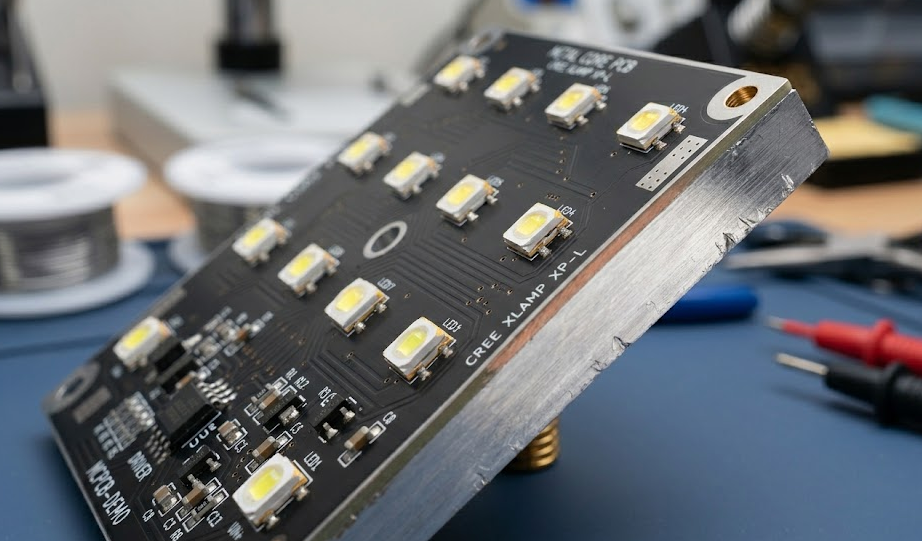
Metal Substrate PCB Can Solve LED Overheating
High-power LEDs overheat because the board beneath them cannot move heat away fast enough. Metal substrate PCB solves this through the board’s own structure. The metal base provides a faster thermal pathway, helping lower LED junction temperature, slow lumen depreciation, and improve long-term reliability.
The right choice depends on power level, operating environment, base material, copper thickness, and supplier capability. For most LED lighting products, an aluminum substrate is the natural starting point. A copper substrate only makes sense when the design carries higher power density or more demanding thermal requirements.
When base material, copper thickness, and thermal design are all matched to the application, overheating stops being the primary reason LED products fail ahead of schedule.
