
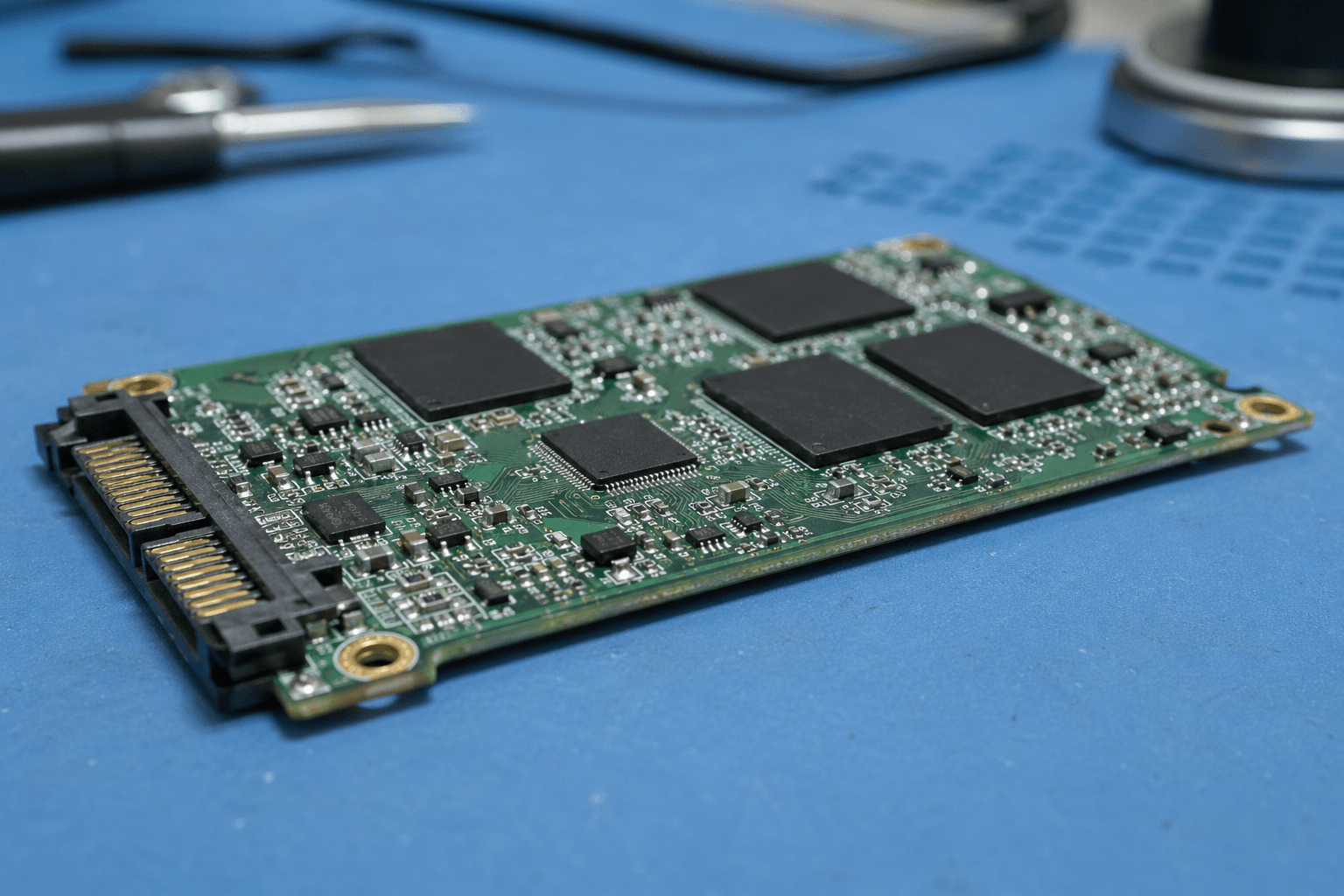
Can a 2 Layer SSD PCB Handle 24/7 Industrial Storage Demands?
Yes, and for most industrial storage applications, it handles them well. The assumption that a two-layer board is too simple for demanding environments gets disproved regularly in the field. But “capable” and “correctly specified” are not the same thing. A 2 layer SSD PCB that works reliably in a factory floor controller looks very different from one pulled off a standard production run. Knowing the difference before placing an order saves time, money, and a lot of headaches down the line.
What Is a 2 Layer SSD PCB and How Does It Fit Into Industrial Storage?
A 2 layer SSD PCB is a printed circuit board with two conductive copper layers, one on top and one on the bottom, designed specifically to support solid state drive components. Signals travel through traces on both surfaces, connected where needed by drilled vias. It’s a relatively straightforward stackup, which is exactly why it works well in industrial storage: fewer layers mean fewer variables, easier inspection, and more predictable behavior under stress.
Industrial storage devices, think embedded controllers, edge computing nodes, and machine vision systems, need a PCB that performs consistently, not brilliantly for six months and then unpredictably. A two-layer design, when built to the right standards, delivers that consistency. The simplicity of the stackup is a feature, not a limitation.
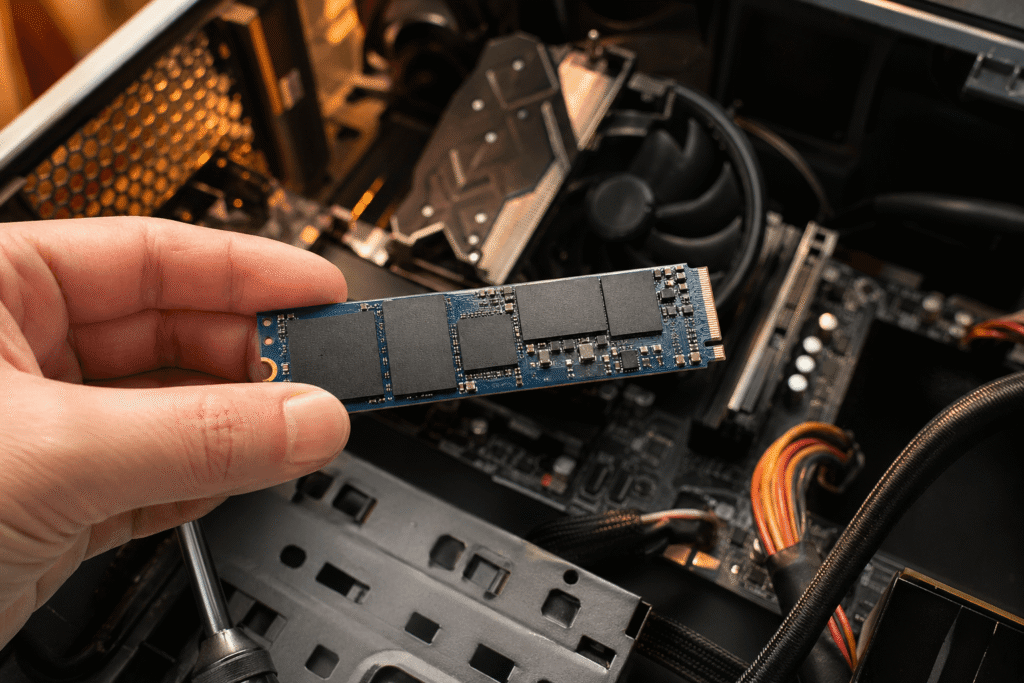
Will a 2 Layer SSD PCB Hold Up in -40°C to 85°C Conditions?
This is the question most buyers should be asking, and most don’t until something fails. Temperature range is not just a spec to check off. It’s the environment the board lives in every single day, cycling between cold startup and full operating heat repeatedly over years of deployment.
Why Material Grade Is the First Thing That Matters
Not all FR4 is the same. Standard FR4 TG130 begins losing dimensional stability as temperatures climb past 70°C, a threshold that many industrial environments cross regularly. FR4 TG170 holds its structure significantly higher, staying stable across the full -40°C to 85°C range. That stability matters because every degree of softening increases stress on solder joints and copper traces during thermal cycling.
For applications beyond that range, outdoor deployments in extreme climates or equipment inside engine compartments, polyimide substrates take over where FR4 leaves off. The material choice is not a minor detail. It forms the foundation on which everything else depends.
How Heat Accumulates Inside a Two-Layer Board
Two copper layers dissipate heat differently from a multilayer board. There is less internal copper mass to spread thermal load, which means hotspots develop faster when components run hard. During sustained read/write cycles, flash controllers and power regulation components generate concentrated heat. Without deliberate thermal layout, wider ground planes, strategic copper pours, and thermal vias placed at high-load zones, that heat has nowhere to go.
A board running 15°C above its target operating temperature does not just perform worse. It ages faster. Industry data consistently shows that every 10°C increase in sustained operating temperature cuts electronic component lifespan by up to half. That represents the real cost of a poorly specified thermal layout.
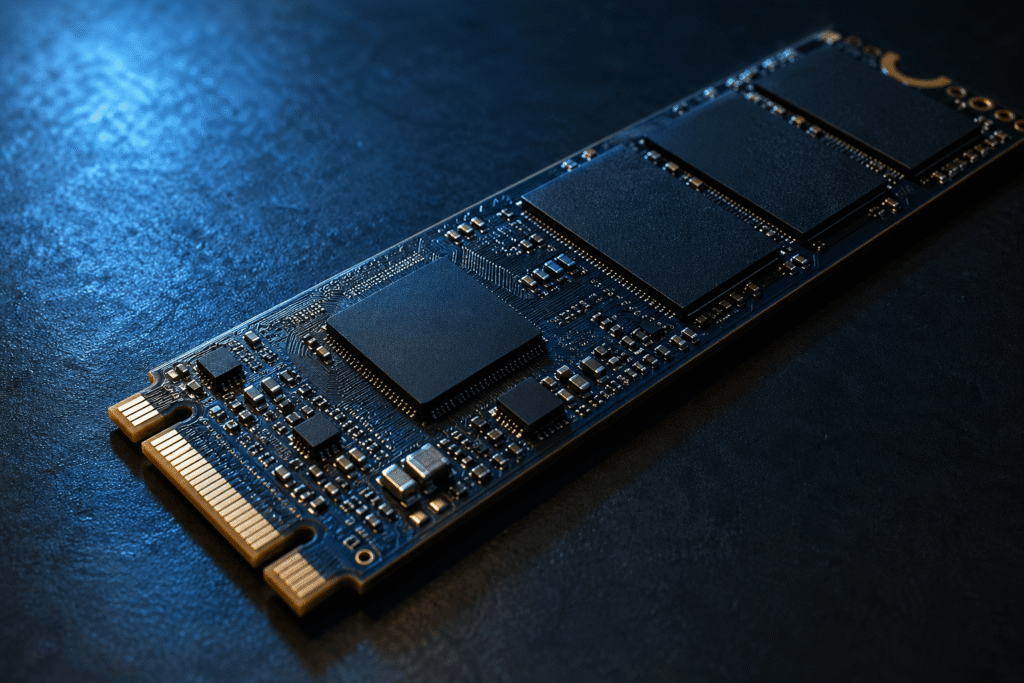
Can it run continuously, day and night?
Continuous operation exposes weaknesses that intermittent use never reveals. Thermal cycling fatigue drives most failures in 24/7 industrial electronics. The cumulative stress from repeated expansion and contraction works against solder joints and via barrels over thousands of cycles, and the board either handles that stress or it doesn’t.
A properly specified 2 layer SSD PCB addresses this through several deliberate choices. Via barrel plating meets IPC-6012 Class 3 minimums, giving copper walls enough thickness to resist cracking under repeated stress. Controlled impedance traces maintain signal integrity under sustained load rather than drifting as temperatures change. Solder mask formulations rated for extended thermal exposure prevent the delamination that shorter-cycle boards never encounter.
Conformal coating is worth considering for environments with humidity or particulate exposure. For storage devices in food processing facilities, outdoor enclosures, or near cutting equipment, it adds meaningful protection at relatively low cost.
A 2 Layer SSD PCB Will Never Let You Down
As long as the 2 layer SSD PCB complies with the FR4 TG170 material grade, features 2 oz outer copper foil thickness, and holds IPC-6012 Class 3 certification, it operates reliably and continuously in industrial environments across the full -40°C to 85°C temperature range.
Establishing the correct specifications from the outset and partnering with a supplier that has practical production experience in continuous-operation storage applications are key to ensuring the board performs throughout its entire deployment lifecycle. Before placing an order, review the full printed circuit board options available and confirm your supplier can provide documentation verifying compliance with each specification.
