
What is SSD PCB and what are its main functions?
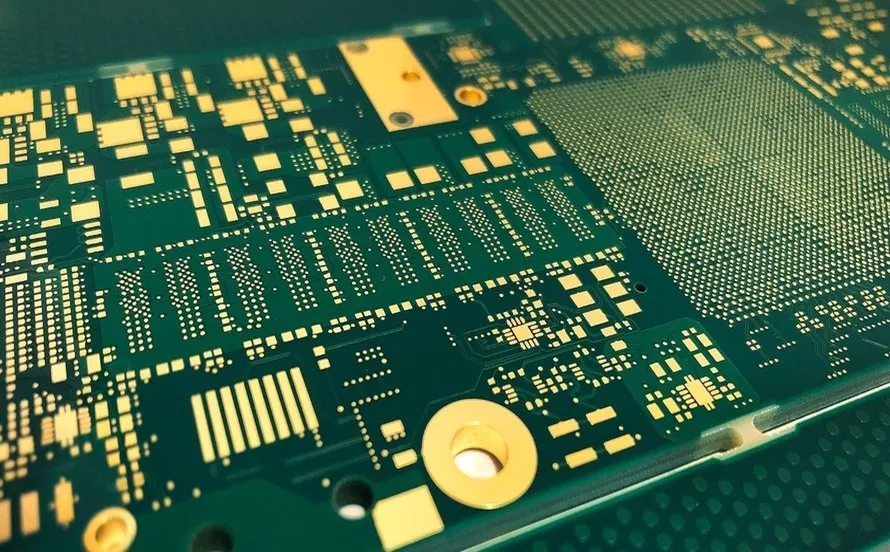
You’ve probably heard the terms “SSD circuit board” or “SSD PCB,” but what’s the real story? It’s not just a generic slab of green fibreglass; it’s a high-performance platform custom-built to be the “backbone” of your drive. In the industry, we consider it the system’s silent anchor—it’s the part that actually dictates how fast your drive runs, how it handles heavy workloads, and how many years it’ll last before giving up the ghost.
Even though SSDs are in almost every gadget we own, the PCB is usually the one component everyone ignores. So, what’s actually happening behind the scenes on that board, and why is it so critical to the tech we rely on every day?
Solid-State Drive Circuit Board Basics
First, we must clarify the fundamental definition of an SSD PCB. An is a specialised printed circuit board designed specifically for Solid State Drives (SSDs). It utilises advanced materials and manufacturing processes to support high-speed data storage and transmission.
It serves as the “central nervous system” for all internal components within an SSD. The SSD PCB interconnects flash memory chips, controller chips, and various interfaces. Even if an SSD contains the highest quality flash memory and controller chips, a reliable SSD printed circuit board would be essential to make these components functional.
Adherence to high-quality substrate materials and precision manufacturing processes constitutes the official technical standard for SSD PCBs. This efficiently manages data transfer, integrates internal components, and ensures the drive’s overall durability.
SSD PCB Core Functions and Product Features
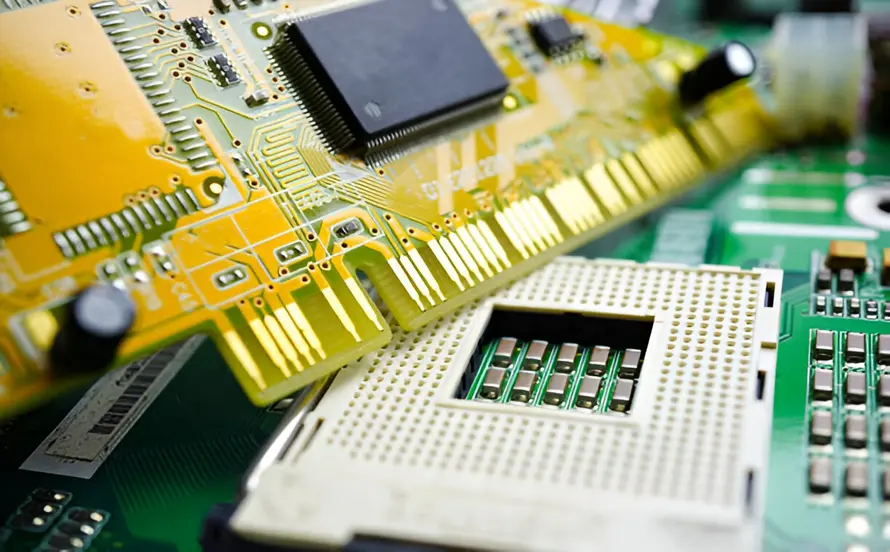
As the core carrier of a Solid State Drive (SSD), the SSD PCB (Printed Circuit Board) is responsible for interconnecting all critical components, coordinating their collaborative operation, and ensuring the drive’s overall performance, stability, and reliability. It establishes the foundational platform connecting the controller chip, flash memory chips, and other peripheral circuitry, while simultaneously integrating key functions such as high-speed data transmission, component integration, power management, and thermal management.
What functions does the have
The SSD PCB’s main function is managing high-speed data transmission, ensuring rapid and lossless data transfer between the flash memory and controller chips. It features strict impedance control to prevent signal reflection and loss.
It also integrates the flash memory chips, providing a stable platform for mounting and connecting key components. Its optimised layout reduces signal interference, ensuring system stability.
Additionally, the SSD PCB manages power distribution and thermal control, ensuring even power supply and quick heat dissipation through thermal vias and embedded copper layers to prevent overheating and performance drops.
SSD PCB product features details
To help you quickly grasp the advantages of our SSD PCB, we’ve summarised its core product features in the table below:
| Product Feature | Key Data |
| High-Precision Manufacturing | Min Trace 3/3mil, Min Hole 0.15mm |
| High-Quality Material | FR4 TG170, Copper 1-3oz |
| Quality Certification | IATF 16949, ISO 9001, UL |
| Customizable Design | M.2/U.2, 8/10 Layer Option |
| Thermal Management | Thermal Vias, Embedded Copper Layers |
Beyond these core features, our SSD PCB also offers low power consumption and shock resistance. Compared to traditional hard disk circuit boards, it delivers better stability and a longer lifespan, making it suitable for a variety of complex working environments.
SSD PCB Application Scenarios
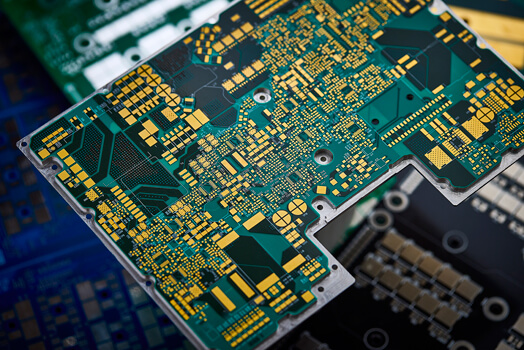
Various industries widely use SSD PCBs. Consumer electronics such as smartphones and laptops use SSD PCBs for fast data transfer and compact size.
In automotive electronics, SSD PCBs are found in ADAS, sensors, and infotainment systems. They withstand harsh vehicle environments while ensuring stable operation.
In medical, aerospace, defense, and telecom fields, devices rely on SSD PCBs for high stability and reliability.
As technology advances, more industries are expected to adopt SSD PCBs, replacing traditional circuit boards to boost device performance and stability.

FAQ (Frequently Asked Questions)
Q1: What is an SSD PCB and its core position?
A1: An is a specialised circuit board for SSDs, connecting internal components to support stable operation.
Q2: What are the main functions of the SSD PCB?
A2: It manages data transmission, integrates memory chips, handles power, and dissipates heat to ensure stability.
Q3: What are the key features of SSD PCB?
A3: High-precision manufacturing, quality materials, strict control, customizable design, and excellent thermal management.
Q4: Which fields use SSD PCB?
A4: Consumer electronics, automotive, medical, aerospace, and telecommunications.
Q5: How does the SSD PCB affect SSD performance?
A5: It impacts speed, stability, and lifespan through data transmission and heat dissipation.
SSD PCB: Definition and Core Functions
An SSD PCB (Solid-State Drive Printed Circuit Board) is a specialised printed circuit board designed for SSDs, where it connects the internal components to support high-speed data transmission and stable operation. It manages high-speed data transfer, integrates flash chips, supplies stable power, and dissipates heat, directly affecting SSD performance.
